 Deutsch.
 English
 Español
Professioneller Hersteller von Autokettenrädern
Article Directory
Two similar engine families sit in the same model lineup, one chain-driven and one belt-driven. Both need a timing component replaced at 120,000 km. If the parts order uses "timing pulley" when the engine actually runs a chain, the repair bay stops before the first bolt turns.
That mix-up happens more often than it should, because "sprocket" and "pulley" are used loosely in parts catalogs and online forums. The two components are not interchangeable. A timing sprocket drives a timing chain. A timing pulley drives a timing belt. Both keep the crankshaft and camshaft in sync, and both are toothed wheels, but their geometry, materials, lubrication, and service life are engineered for two completely different drive systems.
What Is an Engine Timing Sprocket?
A timing sprocket is a toothed wheel that meshes with the roller links of a timing chain. It looks like a compact chainring, and it transmits torque through positive engagement: each sprocket tooth pushes against a chain roller, moving the chain without slippage. Because the chain rides inside the engine in an oil environment, the contact is metal-on-metal and the sprocket must survive hundreds of millions of load cycles.
That is why production timing sprockets are almost always made from hardened alloy steel. The tooth flanks are case-hardened to resist abrasive wear and contact fatigue, and the machining tolerances are tight enough to keep the chain running quietly. Typical tooth counts range from 18 to 22 on the crankshaft and 36 to 44 on the camshaft, maintaining the 2:1 rotation ratio required for four-stroke operation.
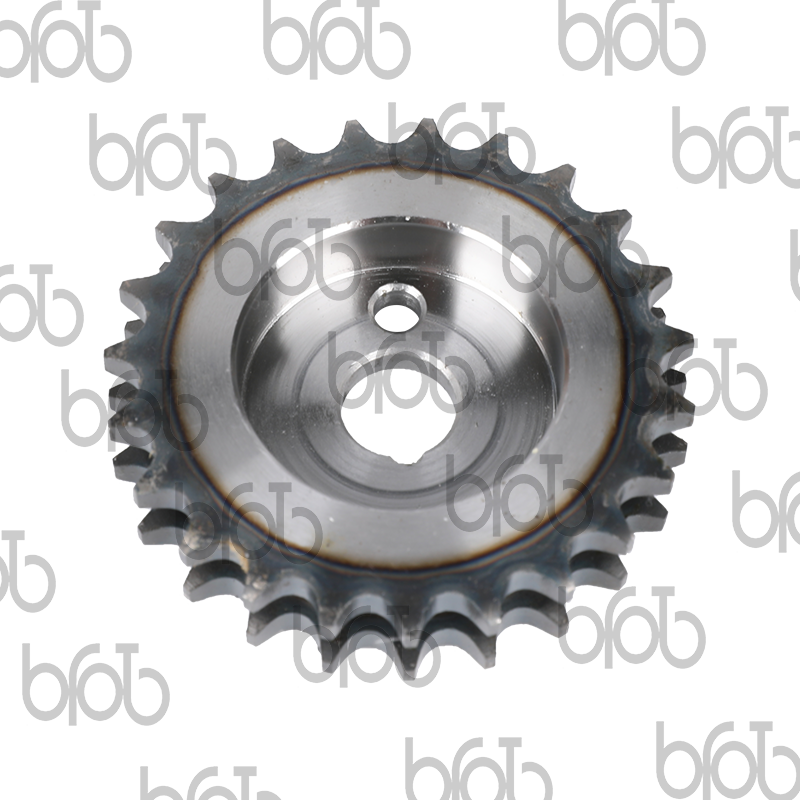
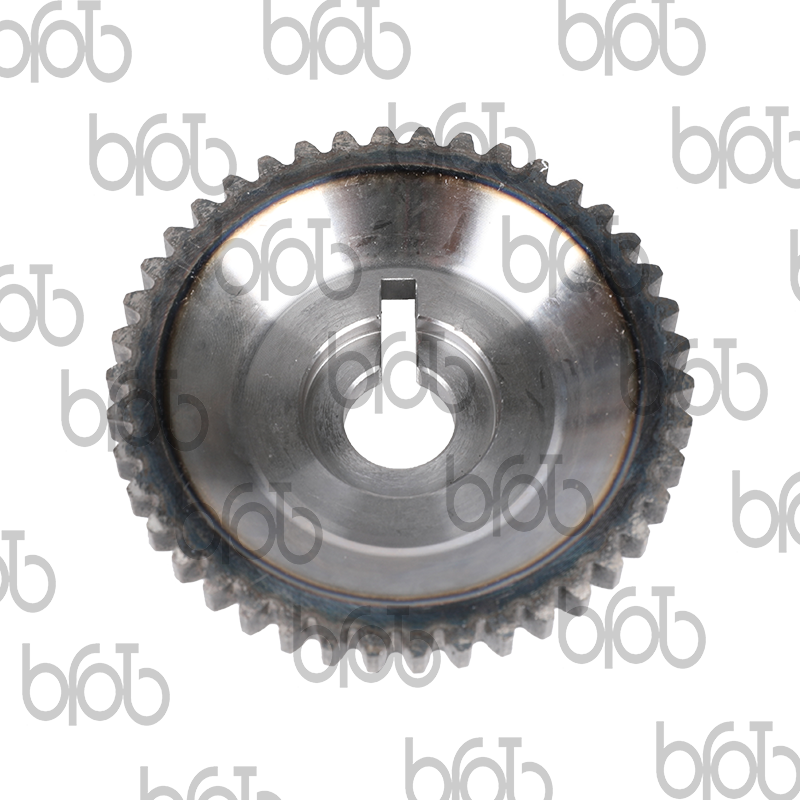
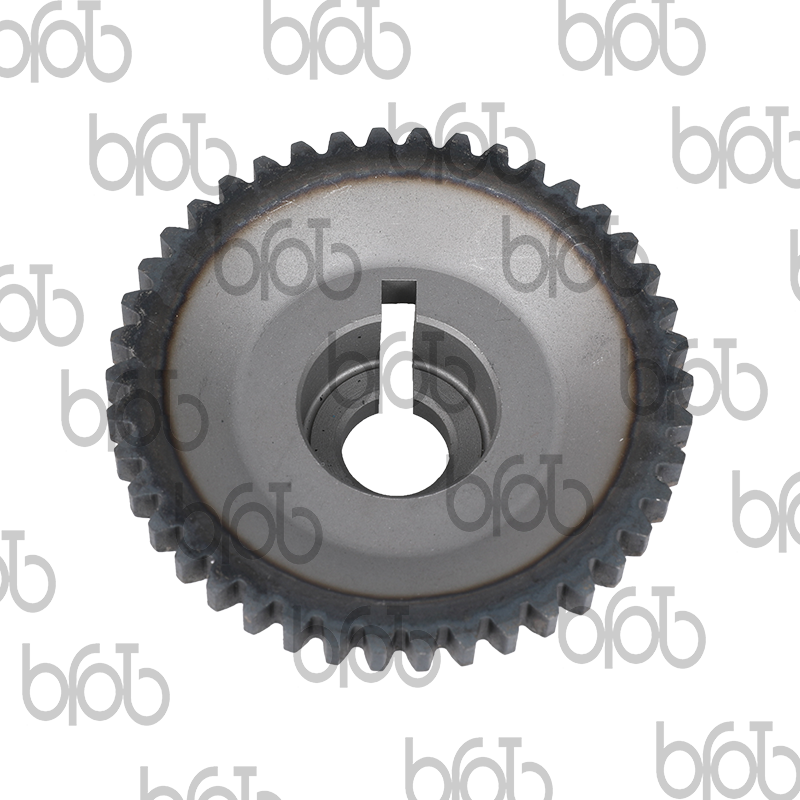
Camshaft sprockets have grown more complex in recent years. On the Nissan HR16 engine used in many compact cars, the Nissan HR16 engine timing camshaft gear doubles as the sensor trigger wheel, so the tooth profile and the trigger pattern have to be machined together. A replacement that matches only the bolt pattern but not the tooth form will produce timing codes and chain noise within weeks.
 Wholesale automobile Nissan HR16 Engine Timing Camshaft Gear Suppliers, Manufact Jiaxing Befeite Chain Wheel Manufacturing Co., Ltd. is Wholesale automobile Nissan HR16 Engine Timing Camshaft Gear Manufacturer, Company... View Product →
What Is an Engine Timing Pulley?
A timing pulley is a toothed wheel that engages a timing belt. The belt's molded teeth seat into the pulley grooves, and torque transfers through the tooth flanks as the belt wraps the pulley. Unlike a chain system, a belt drive runs dry. There is no oil splash in the belt compartment, so the pulley relies on its geometry and surface finish to control wear.
Timing pulleys are typically cast iron, sintered metal, or aluminum. The grooves are wider and shallower than sprocket tooth spaces because belt teeth must deform slightly as they enter and exit the pulley. The pulley itself often survives several belt changes, but the first signs of trouble show up as belt teeth shearing off or a bent flange letting the belt walk off the edge. Once the pulley grooves are polished round or the flange is damaged, a new belt will fail quickly.
The choice between chain and belt is made by the engine designer, and it determines the maintenance schedule. A belt drive needs a scheduled replacement interval, typically 60,000 to 100,000 km. A chain drive is meant to last the life of the engine if the oil is changed on time. Understanding those trade-offs is exactly what our comparison of timing chain vs timing belt differences goes into in more depth.
Key Differences at a Glance
The table below summarizes the differences that matter when ordering, inspecting, or replacing either component.
| Aspect | Timing Sprocket | Timing Pulley |
|---|---|---|
| Engages | Timing chain (roller links) | Timing belt (molded teeth) |
| Lubrication | Runs in engine oil | Runs dry; oil contamination causes failure |
| Typical material | Hardened alloy steel | Cast iron, sintered metal, or aluminum |
| Surface hardening | Case-hardened flanks, 50-60 HRC typical | Localized or none, depending on belt load |
| Service life | Designed for engine life | Belt interval: 60,000 to 100,000 km |
| Main wear mode | Hooked teeth, step wear at tooth base | Rounded grooves, flange damage, belt smearing |
| Noise signature | Cyclic metallic rattle | Slapping or chirping at belt speed |
| Replacement approach | Inspect sprockets and chain as a set | Replace belt, tensioner, and pulleys together |
Why the Distinction Matters in Service and Repair
Ordering the Correct Part
The biggest practical risk is a wrong part order. A timing pulley cannot be fitted to a chain-driven engine; the chain pitch and roller diameter do not match the pulley groove spacing, so the chain rides too high and timing slips. The reverse is equally bad: a timing belt will tear its teeth within minutes if it runs against a sprocket tooth profile.
The first step is to identify the drive type from the engine code before ordering anything. The second is to check the catalog description against the OEM part number. If a listing alternates between "pulley" and "sprocket", match the exact part number instead of relying on the description.
Reading the Wear Pattern
Worn parts show different signatures, and those signatures tell you which system you are dealing with before you disassemble anything.
- A worn sprocket shows hooking on the tooth flanks and a polished step at the tooth base, with a cyclic metallic rattle that often appears on cold starts.
- A worn pulley shows rounded groove edges, smeared belt material, and sometimes a bent flange; the noise is a slapping or chirping tied to belt speed.
When a chain system is due for repair, plan a complete job: sprockets, chain, guides, and tensioner. Installing a new chain on an old sprocket with hooked teeth is a common cause of early chain failure. A timing gear and sprocket kit buyer's guide lists the components you should include in a chain-driven repair.
Engineering Differences: Tooth Form, Material, and Tolerances
Tooth Form and Pitch
A sprocket tooth is designed around the chain's pitch, roller diameter, and link geometry, with a modified involute profile that lets the chain rollers enter and leave smoothly. Passenger car timing chains typically use pitches from 0.250 to 0.500 inch (6.35 to 12.7 mm). A pulley tooth is designed around the belt pitch, normally 8 to 9.525 mm for automotive timing belts, and uses a trapezoidal or curvilinear profile that seats the belt teeth without pinching.
Material and Hardness
Material selection is where the two parts diverge most clearly. Sprockets use alloy steel, case-hardened on the tooth flanks to a surface hardness commonly in the 50-60 HRC range to survive oil-lubricated sliding contact. Pulleys use cast iron, sintered metal, or aluminum with softer tooth geometries that suit a composite belt. Our article on material options for custom engine timing sprockets expands on why material choice directly influences service life and failure mode.
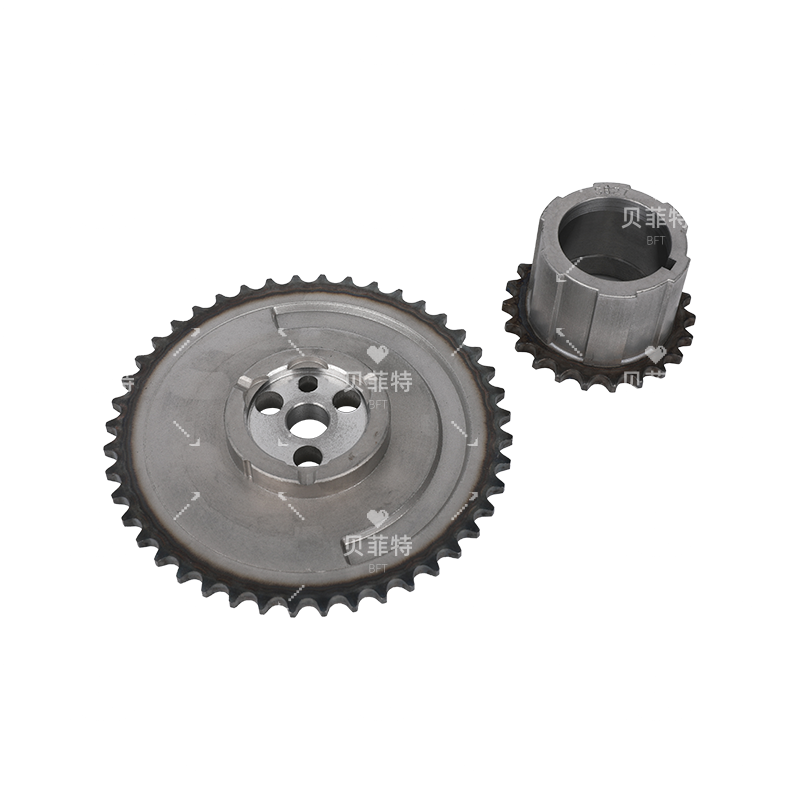
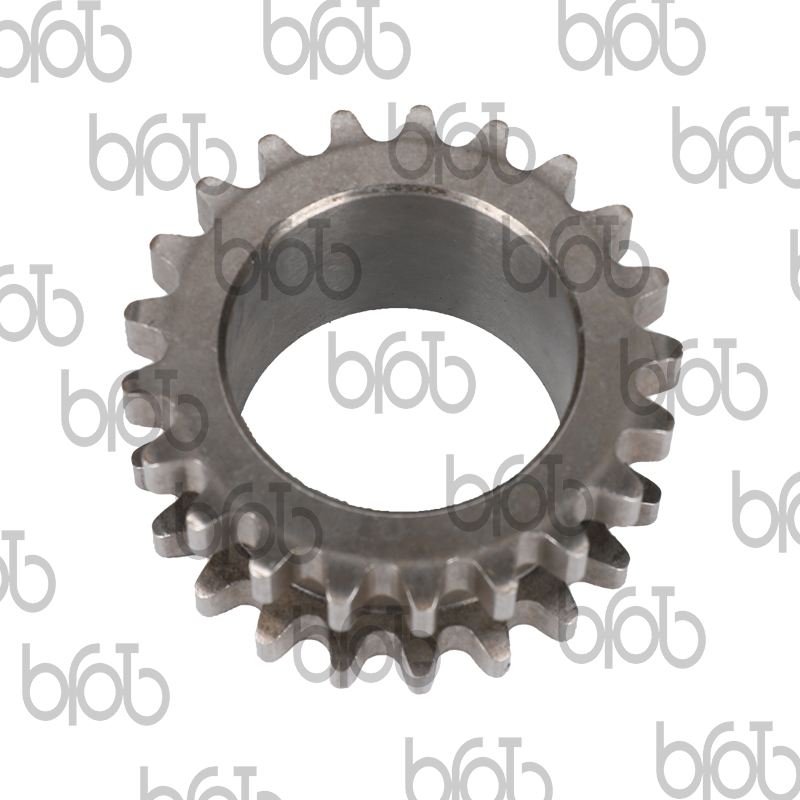
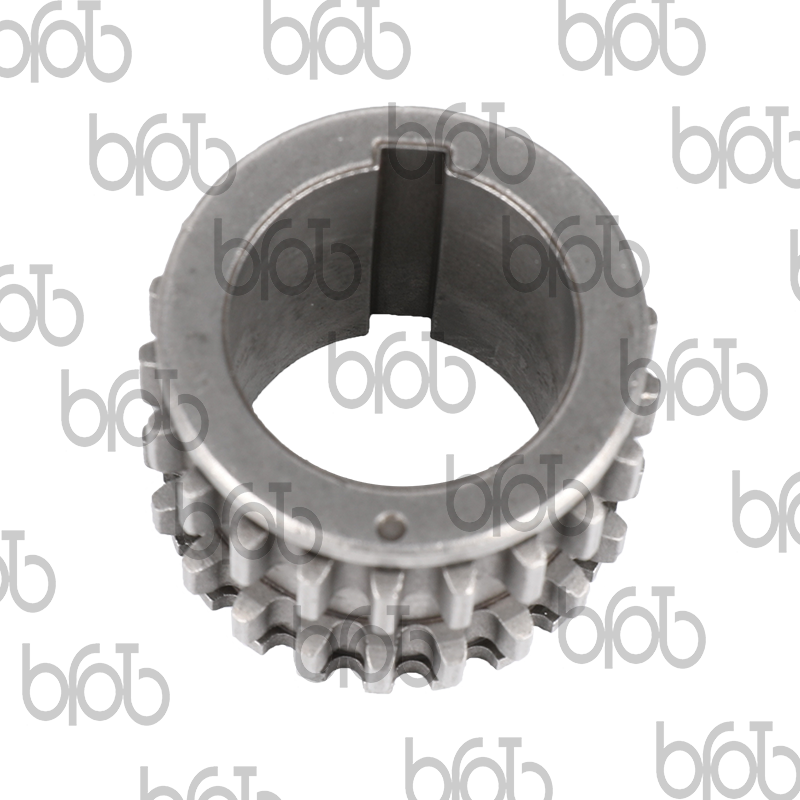
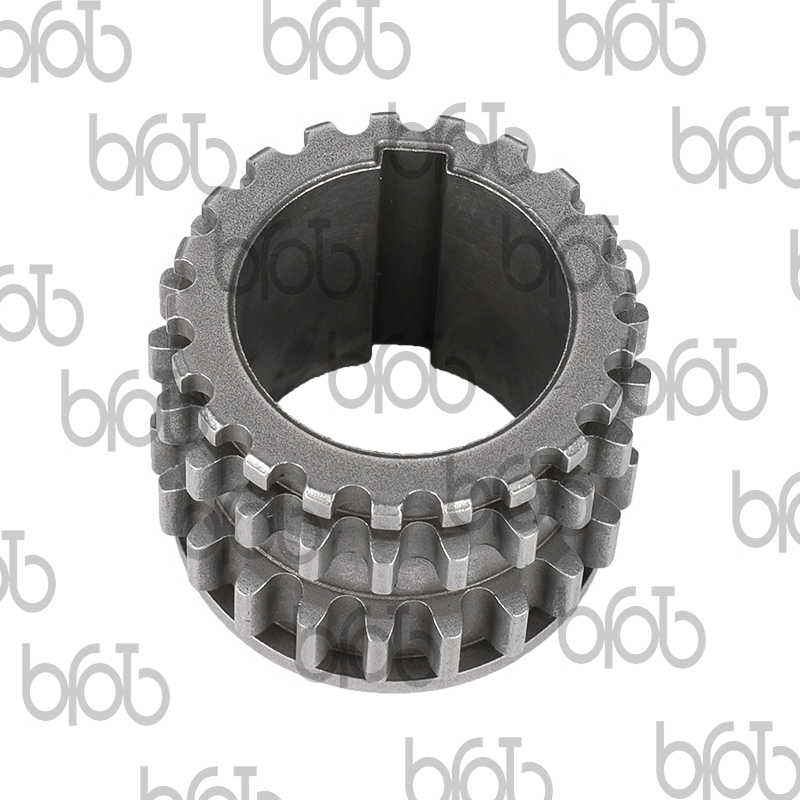
A V8 engine shows this clearly: the Chevrolet timing crankshaft sprockets are small, spin at crankshaft speed, and pull the full timing chain. A replacement that is machined but not correctly hardened will wear quickly and cause chain rattle long before an OEM-grade part would.
 Wholesale automobile Chevrolet Timing Crankshaft Sprockets Suppliers, Manufactur Jiaxing Befeite Chain Wheel Manufacturing Co., Ltd. is Wholesale automobile Chevrolet Timing Crankshaft Sprockets Manufacturer, Company a... View Product →
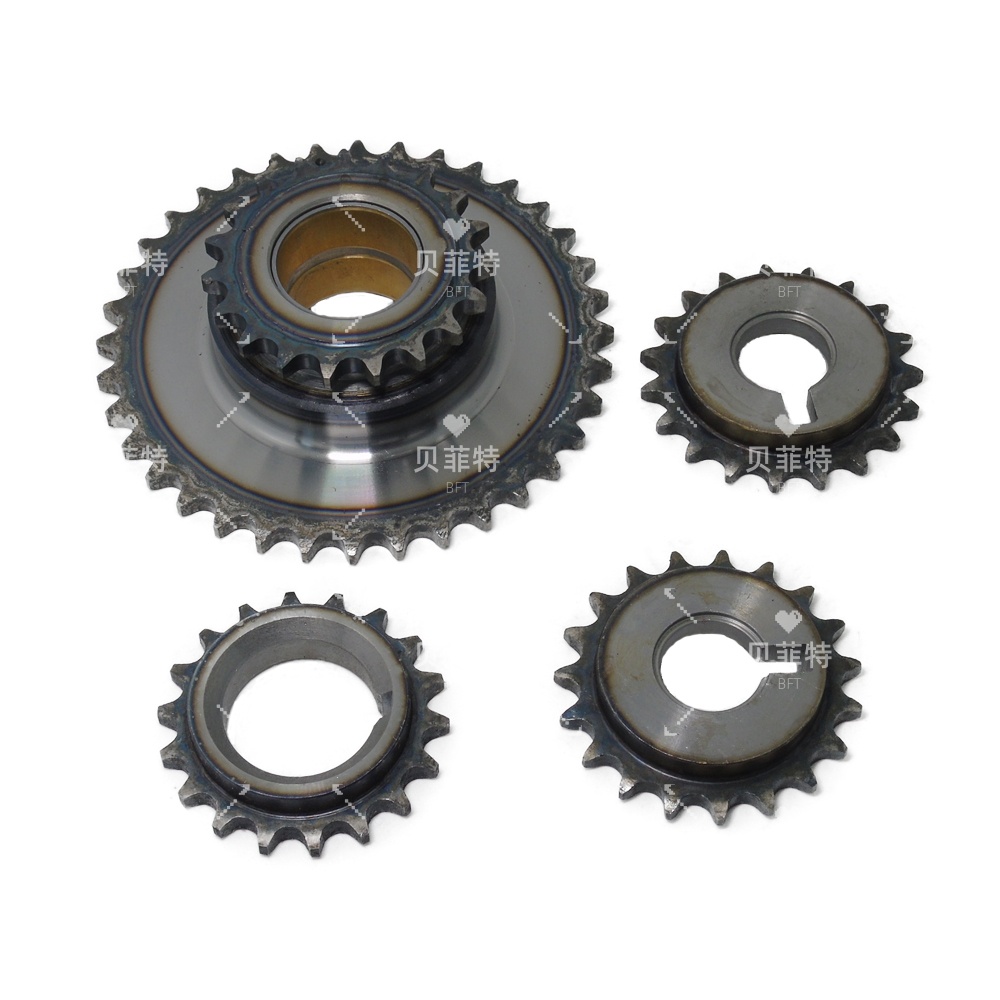
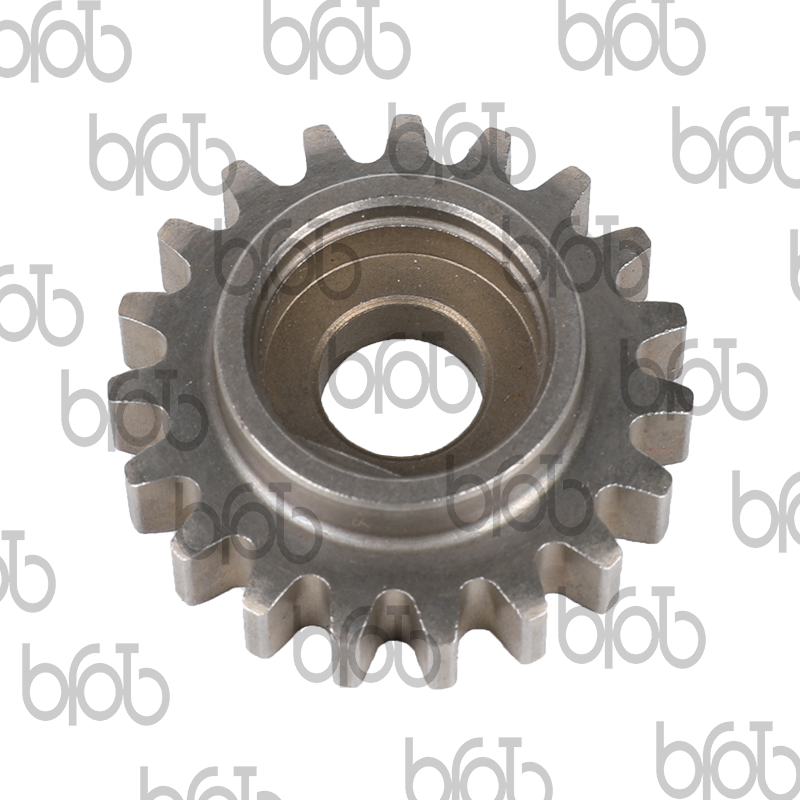
The Volkswagen EA888 crankshaft gear is a similar case: one part locates the primary timing chain, drives the balance shaft chain, and provides the crank position reference. The hardening has to be correct across all of those contact faces, which is why OEM-grade sprockets and gears are produced with controlled heat treatment rather than simply machined and shipped.
 Wholesale automobile Volkswagen EA888 Crankshaft Gear Suppliers, Manufacturers Jiaxing Befeite Chain Wheel Manufacturing Co., Ltd. is Wholesale automobile Volkswagen EA888 Crankshaft Gear Manufacturer, Company and Su... View Product →
How to Avoid the Most Common Ordering Mistake
A short checklist covers most situations:
- Determine whether the engine is chain- or belt-driven before placing the order; the engine code or the timing cover label settles it in seconds.
- Visually confirm the old part: a sprocket has narrow, sharp-sided teeth for chain rollers, while a pulley has wider, rounded grooves that seat a belt's teeth.
- Match the OEM part number. If a catalog description swaps between "pulley" and "sprocket", trust the part number, not the wording.
When the correct part arrives, check the keyway, bore fit, and tooth edges before installing. A sprocket or gear with burred tooth flanks or a broached keyway that is off-center will cause runout and uneven chain tension. If the part passes those checks, install it with the timing marks aligned and follow the torque specification for the crankshaft or camshaft bolt.
Final Takeaway
An engine timing sprocket and a timing pulley are not the same component. A sprocket drives a timing chain in an oil bath; a pulley drives a timing belt in a dry compartment. That single difference drives the geometry, materials, wear signatures, and replacement intervals of the two parts. Identify the drive system first, order the correct part, and replace the components as a matched set.